Vascular Testing in Greater Valley Area
Vascular Testing Near You
A wound on your foot or lower leg may stay open for a reason you cannot see. Sometimes the real problem is poor blood flow. At Rampertab Podiatry On Site Podiatry Serving The Greater Valley Area, we provide Vascular Testing in Greater Valley Area for patients who need a closer look at circulation without the burden of repeated travel. This kind of testing helps us understand whether blood flow may be slowing healing, especially in the feet and lower legs.
If you are looking for Vascular Testing near you, we bring care directly to you. Our providers travel to homes and facility settings, which helps remove transportation barriers for seniors, care-facility residents, and people with limited mobility. We serve patients across the greater Valley area and bring care to those who have difficulty leaving home.
What Is Vascular Testing?
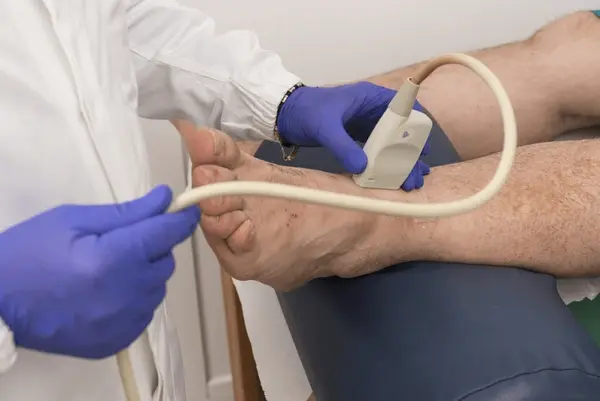
Vascular testing checks how well blood moves through your legs and feet. This is important for wound care because skin and tissue need good blood flow to heal. If blood flow is low, wounds may heal slowly or stop getting better.
ABI testing is a common test that compares blood pressure in your ankle and arm to find poor circulation, including peripheral artery disease.
We offer Vascular Testing in Greater Valley Area as part of your care when a wound lingers, reopens, or does not heal as it should. We may pair this testing with wound assessment and other advanced wound services so the treatment plan fits what your body is actually doing.
Why Vascular Testing Matters
Even if a wound looks small, poor circulation can keep it from healing properly. Vascular testing helps us determine whether blood flow is part of the reason. This way, we can plan the best care for you.
This testing helps us:
Check Blood Flow
We see whether circulation to the lower leg and foot may be reduced.
Spot Healing Barriers
We identify issues that may be slowing wound closure.
Guide Next Steps
We use the results to decide which type of wound support will help most.
Support Safer Care Decisions
We get more information before choosing treatment for a wound that is not improving.
This kind of information can be especially useful for patients with chronic wounds, lower-leg ulcers, diabetic foot problems, or other wounds that have been slow to heal.
How Vascular Testing Works
If you choose us for Vascular Testing near you, we make the process straightforward and easy to understand. Instead of guessing about your wound’s circulation, we measure it.
Here are the steps we usually follow:
Initial Review
We examine your wound, skin, swelling, and symptoms.
Blood Pressure Comparison
We check your blood pressure in your arms and ankles to compare flow.
Circulation Assessment
We evaluate whether poor blood flow is affecting the wound.
Result Interpretation
We review the numbers alongside your wound and symptoms.
Care Planning
We use those findings to guide the next step in treatment.
ABI testing is noninvasive and commonly used to help detect circulation problems in the legs. It can support wound-care decisions by showing whether poor arterial flow contributes to delayed healing.
What We Do During Care
We include vascular testing as a part of your overall wound-care plan, rather than just looking at the numbers by themselves. This helps us understand how your blood flow relates to the condition of your skin and tissue.
Your care may include:
Wound Review
We assess the size, drainage, depth, and surrounding skin.
Vascular Testing
We check circulation when blood flow needs a closer look.
Smart ABI Testing
We may use ABI-based testing to compare arm and ankle pressures.
Neurological Review
We may also look at nerve function when feeling changes may be part of the issue.
Follow-Up Planning
We decide which rechecks, dressings, or wound support may be helpful next.
Through on site podiatry in Greater Valley Area, we can bring this service directly to patients in homes and facilities instead of asking them to keep traveling for testing and follow-up.
Our Individualized Approach
We do not use vascular testing the same way for every patient because not every wound has the same cause. Some wounds stay too wet. Some become too dry. Some sit on top of weak circulation. We use the test results, along with the wound’s condition, so your care matches what is slowing healing.
That approach helps us:
Choose Your Care Carefully
We use testing to guide decisions instead of relying on guesswork.
Match Your Treatment to the Problem
We connect blood-flow findings with your wound’s behavior.
Adjust as Your Conditions Change
We update care if your wound or symptoms shift over time.
Support Better Healing Conditions
We use the information to build a more realistic wound plan.
Why Patients Choose Us for Vascular Testing
You need more than a test. You need a care model that works in daily life and helps you act on the results.
Here is why patients choose us for Vascular Testing in Greater Valley Area:
We Come to You
We travel directly to the patient instead of requiring office-only visits.
We Serve Different Care Settings
We provide care in homes, rehab settings, assisted living communities, and similar environments.
We Connect Testing to Wound Care
We do not stop at the result. We use it to guide the next step in care.
We Make Follow-Up Easier
Repeat checks are easier when your provider comes to you.
We Support Ongoing Care
Our mobile podiatrist in Greater Valley Area helps patients receive dependable testing and wound care where they already are.
This mobile care model can be especially helpful for elderly patients and people who cannot travel easily.
Get Answers When a Wound Needs More Than a Surface Check
At Rampertab Podiatry On Site Podiatry Serving The Greater Valley Area, we provide Vascular Testing near you to examine circulation and identify wound-healing barriers. We bring care directly to you, review the results, and use that information to support the next step in treatment. Call us today at (602) 501-0328 to book your appointment.
FAQs
What does vascular testing look for?
It looks at how well blood is moving through your legs and feet and whether poor circulation may be affecting healing. ABI-based testing is one common way to do this.
Does this test hurt?
ABI testing is noninvasive. You may feel pressure from the cuffs, but it does not involve needles or surgery.
Why would I need vascular testing for a wound?
If blood flow is reduced, a wound may heal slowly. Vascular testing helps us see whether circulation is part of the reason your wound is not improving.
Do you travel to the patient?
Yes. We provide mobile care and testing in homes and facility-based settings across the greater Valley area.
Is vascular testing only for people with diabetes?
No. It can help anyone whose wound, lower-leg circulation, or healing needs a closer vascular review. People with diabetes may benefit, but they are not the only ones who do.