Venous Ulcer Treatment in Greater Valley Area
Venous Ulcer Treatment Near You
A sore on the lower leg that keeps coming back can wear a person down in quiet ways. It can leak, ache, and make even simple movement frustrating. At Rampertab Podiatry On Site Podiatry Serving The Greater Valley Area, we provide venous ulcer treatment in Greater Valley Area for patients who need steady wound care without the hassle of repeated travel. Venous ulcers often develop on the lower legs when poor venous circulation causes blood to pool, swelling to build up, and the skin to weaken.
If you are looking for venous ulcer treatment near you, we bring care directly to the patient. Our providers travel to homes and facilities, which helps remove transportation barriers and makes treatment easier for elderly patients and people with limited mobility. We use a mobile care model so we can monitor wounds closely and provide care where patients are most comfortable.
What Is Venous Ulcer Treatment?
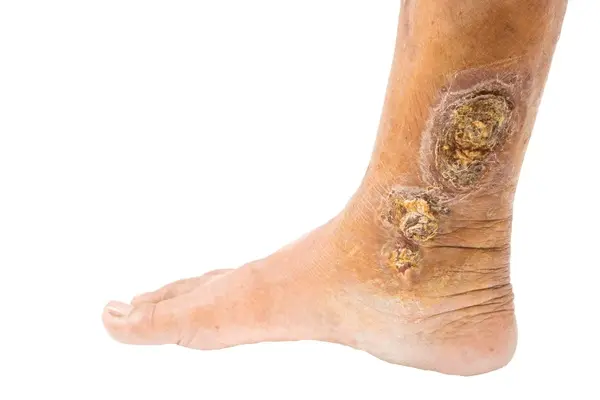
A venous ulcer is a wound that usually appears on the lower leg because the veins are not moving blood back up the leg as well as they should. When blood pools, the skin becomes weaker, swelling may develop, and the wound can remain open for a long time. These ulcers are often painful, slow to heal, and prone to coming back.
Treating a venous ulcer means more than placing a dressing over the sore. We look at the wound itself, the amount of drainage, swelling in the leg, the condition of the surrounding skin, and whether circulation problems are slowing healing. We then build a plan around what that wound needs right now.
If you have mobility restrictions for any reason and need venous ulcer treatment in Greater Valley Area, we are here to help.
Why Venous Ulcers Need Ongoing Care
Venous ulcers do not usually improve with a quick fix. If swelling stays high or pressure in the veins is not managed, the wound can remain open, become irritated, or return after it seems better. That is why regular follow-up matters.
Here is what ongoing care helps us do:
Control Swelling
We work to reduce edema that can keep the wound from healing.
Protect the Skin
We protect fragile skin around the ulcer from further breakdown.
Track Healing
We monitor changes and adjust dressings or compression when needed.
Lower Risk
We work to reduce infection risk and other wound-related problems.
Compression therapy is considered essential for venous ulcers because it helps reduce edema, improve venous return, and create better conditions for healing.
Why Choose Our Mobile Care Model
There are real advantages to getting wound care where the patient already is. This matters for seniors, people who use walkers or wheelchairs, patients in assisted living, and anyone who depends on caregivers for transportation. Instead of having the patient leave home or a facility repeatedly, we bring wound care directly to them.
Our care model includes:
Direct Visits
We travel to the patient for wound evaluation and treatment.
Facility-Based Care Delivery
We provide care in homes, rehab settings, assisted living, and similar care environments.
Reduced Transportation Barriers
We remove the stress of repeated outside appointments.
Consistent Follow-Up
We return as needed to check healing and update the plan.
Care Team Communication
We work with caregivers and facility staff to keep treatment on track.
Through on site podiatry in Greater Valley Area, we make wound care more practical for patients who need regular attention but cannot easily leave home or their care setting.
Smart Testing and Specific Treatment
Venous ulcers should not be treated with guesswork. We may use smart ABI testing, which includes vascular and neurological testing. This helps us understand circulation and nerve health before deciding how to move forward. In venous wounds, both blood flow and swelling matter, so accurately assessing the situation is important. We also use specific wound care methods instead of the same plan for everyone.
Here is how that helps:
Smart ABI Testing
We check your circulation and nerve function to better understand healing barriers.
Specialized Dressings
We choose dressings based on your drainage, tissue condition, and the wound’s current stage.
Compression Therapy
We may use multi-layer compression to reduce your swelling and support venous return.
Topical Applications
We may use wound products that match your wound’s needs at that stage.
Targeted Monitoring
We keep track of changes in your wound so your treatment can be adjusted quickly.
This makes our venous ulcer treatment near you more than routine wound care. It is a treatment approach built around the wound’s actual condition and the circulation problem behind it.
Our Wound Care Philosophy
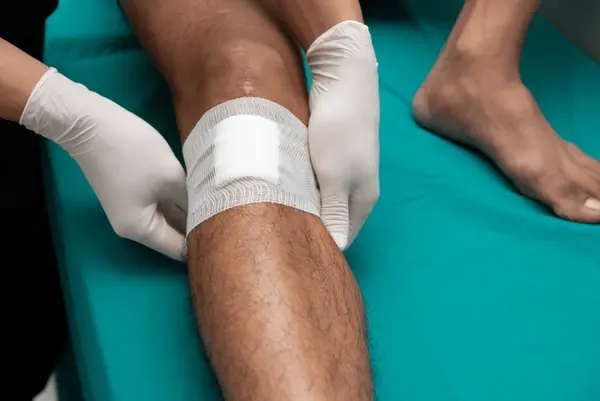
We adjust treatment to your wound. If your wound is too wet, we use dressings to absorb moisture. If it is too dry, we add moisture to help healthy tissue grow. Wounds heal better when moisture is balanced. This approach helps healthy tissue growth, reduces wound-related problems, improves comfort, and supports steady healing.
We do not treat every wound the same way. We adjust care step by step as healing progresses. Our mobile podiatrist in Greater Valley Area helps patients receive steady care in a safe and familiar setting.
Get Help for a Venous Ulcer Before It Gets Worse
At Rampertab Podiatry On Site Podiatry Serving The Greater Valley Area, we provide venous ulcer treatment in Greater Valley Area for patients who need attentive, individualized wound care. We bring treatment directly to the patient, use smart testing to guide decisions, and adjust care based on how the wound is healing.
Call us today at (602) 501-0328 to ask about venous ulcer treatment near you. We are here to help make wound care more accessible, consistent, and easier to maintain.
FAQs
What is a venous ulcer?
A venous ulcer is a wound that usually forms on the lower leg because poor venous circulation causes blood to pool and weakens the skin.
Why are compression wraps often used for venous ulcers?
Compression helps reduce swelling, improve venous return, and create better conditions for healing.
Do you travel to the patient?
Yes. Our providers travel directly to patients and provide care in homes and facility-based settings.
Can venous ulcers come back?
Yes. Venous ulcers are prone to recurrence, which is why regular follow-up, swelling control, and skin protection matter.
What if the patient cannot travel?
That is one of the main reasons this service helps. Our mobile care model removes transportation barriers for elderly and mobility-limited patients.